How Nigerians can access low interest mortgage loans from 6%
Nigeria has long grappled with a persistent and widening
housing deficit estimated at 20-28 million units. This chronic shortage has for
decades remained a damning national challenge, defying the efforts of
successive administrations.
Millions of Nigerians have lived in substandard, overcrowded
and insecure housing conditions, unable to access decent and affordable homes.
Experts attribute this to a combination of factors,
including weak mortgage systems, limited access to credit, ineffective housing
policies and an urbanization rate that continues to outpace housing supply.
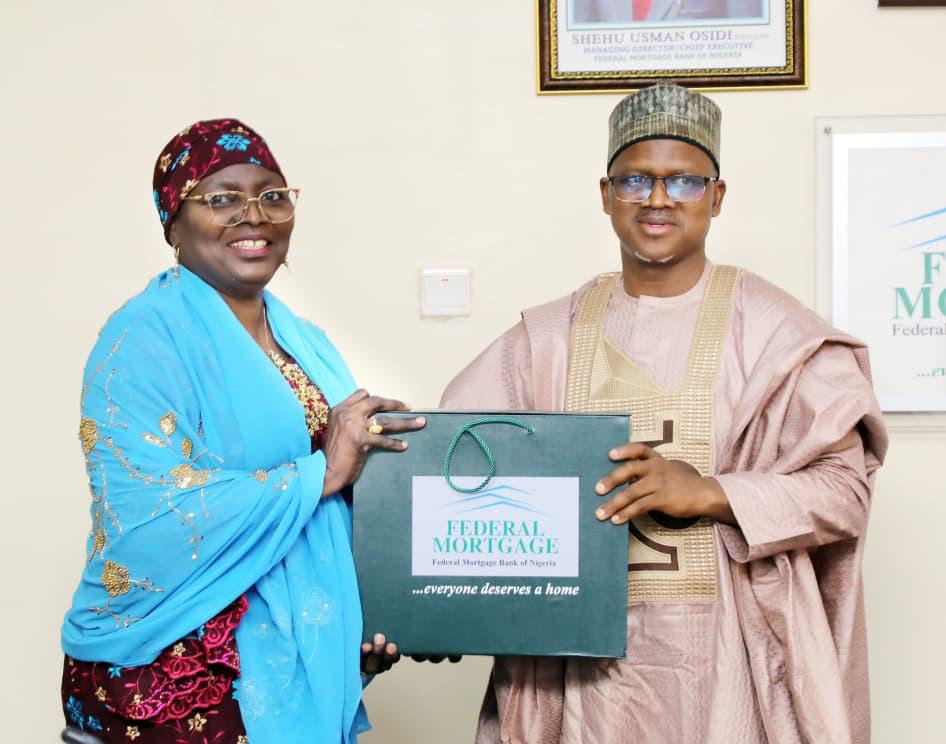
Subsequently, the Managing Director of the Federal Mortgage
Bank of Nigeria, Shehu Usman Osidi has maintained that in Nigeria “We have
houses we do not need and we need houses we do not have. It is true that
Nigeria has a staggering housing deficit but it is also true that there are
many available houses that people cannot afford,”
This assertion underscores the need for a vibrant and
affordable mortgage system that can guarantee affordable.
Mortgage sector challenges
Inflation remains the sector’s most severe challenge. The
National Bureau of Statistics released its Consumer Price Index report for
February 2026, revealing a slight easing in Nigeria’s inflation rate compared
to previous months and the same period last year.
However, analysts say inflation at over 15 per cent still
remains high for meaningful development in Nigeria’s property industry.
A key driver behind this inflationary pressure is the depreciation
of the naira, coupled with global commodity price shocks, both of which have
severely inflated the cost of construction materials. For instance, the price
of a 50kg bag of cement surged from around N3,000 in 2023 to between N10,000
and N11,000 in 2026
Another structural problem is the dearth of reliable housing
data. The government has no comprehensive audit of existing, abandoned, or
informal housing stock, complicating effective policy formulation and resource
allocation.
In addition, the inability of the country to establish
manufacturing hubs that will reduce the high cost of imports and improve local
manufacturing has been one of the major challenges of the mortgage sector. This
is because developers import materials at high rates, which also affects
affordable housing for mortgage.
In the same vein, the high rate of lending at double-digit
has discouraged many Nigerians from accessing mortgage loans.
The current interest rates as set by the CBN is 26.5 per
cent. Experts suggest that primary mortgage banks lending at that rate may
affect the government’s efforts in affordable mortgage.
Stakeholders at different fora advocated a more
comprehensive approach by the Federal Mortgage Bank of Nigeria under the
leadership of Shehu Usman Osidi to tackle the issue.
Findings by Daily Trust showed that the FMBN has introduced several products, such as the
expanded mortgage access, digital banking, rent assistance loans, and
non-interest mortgage loans, among others.
FMBN efforts
Checks by Daily Trust has shown that the Federal Mortgage
Bank hasexpanded product offerings such as Rent-to-Own, Home Renovation Loans,
Rent Assistance, Non-Interest Mortgage and the Diaspora Mortgage Product.
Data from the FMBN show that under the Home Renovation Loan,
over 24,000 Nigerians were able to access up to N1 million each to the total
tune of N21.2billion in the last two years, to improve their homes without the
stringent conditions traditionally associated with mortgages.
The MD of FMBN, Shehu Usman Osidi stated that “FMBN loans
are structured to remain accessible, given at single digit interest rates of 6
or 7 percent. Our pricing structure is also anchored on affordability,
We have also introduced non-interest mortgage products to
cater to Nigerians who prefer ethical financing models, ensuring inclusivity
across different income and belief systems.
“Our products are specifically designed to cushion
low-income earners from prevailing market conditions and our financing model is
robust and inclusive. So, while inflation and interest rates are realities in
the broader economy, our interventions are designed to mitigate their impact on
low-income earning Nigerians “ he said
Also, the FMBN MD noted that “The core banking application,
we have digitised access to affordable homeownership for more Nigerians and
tday, a contributor can register, monitor contributions, and initiate
transactions through our online platforms and USSD code (*219#).
“In 2024, the Bank financed about 2,165 housing units. By
2025, that number rose sharply to 6,911 units, an increase of over 300%.
Beyond these numbers, we are supporting large-scale
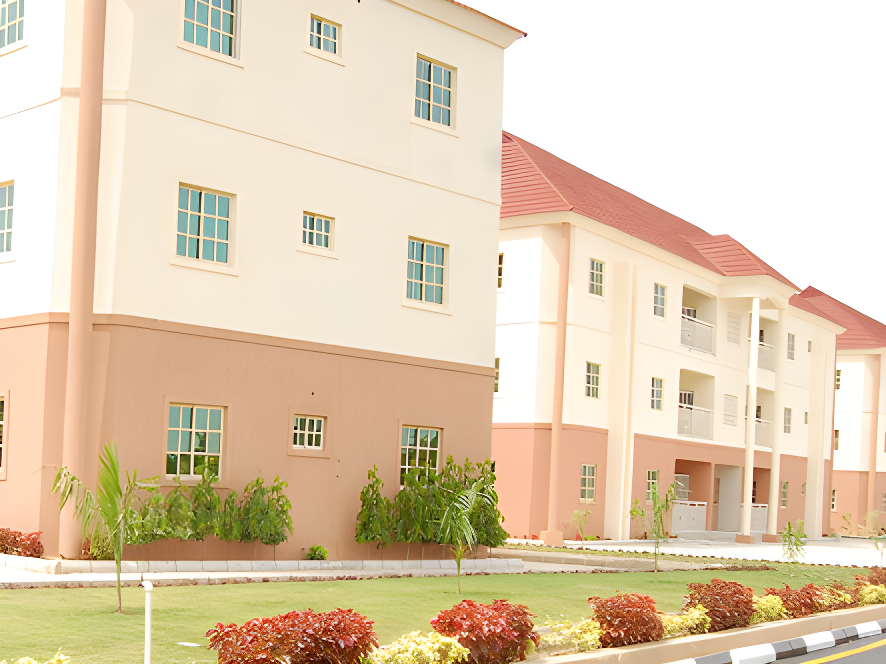
developments under the Renewed Hope Housing Programme. For instance, in
Karsana, Abuja, we have funded 864 housing units at advanced stages of
completion with N19.9 Billion approved in direct funding, out of which N14.3
Billion has been disbursed. This is asides the N100 Billion approved in
off-taker guarantee for the project.
“In Ibeju-Lekki, Lagos, 258 housing units have already been
completed and are ready for commissioning, out of 1,500 units to be constructed
in phases. Over N8 billion has already been disbursed. Also, we have approved
the sum of N7.8 Billion for the Renewed Hope project in Enugu, further
supporting the task of making homes available for Nigerians,”
On impact, he noted that “In 2025 alone, over 15,000
Nigerians accessed Home Renovation Loans, while hundreds benefited from
Rent-to-Own. These are not elite Nigerians; they are teachers, civil servants,
traders and small business owners.
“Our collaboration with labour unions such as the NLC and
TUC. This ensures that organised workers who represent the middle and
lower-income segments are direct beneficiaries of our housing programmes.
“With our newly introduced Non-Interest, Rent Assistance and
Micro Home Improvement Loan which targets the informal sector, FMBN is
instituting an era of unprecedented financial inclusion for previously
underserved populations.
These products are designed to ensure that every segment of
the Nigerian society, including the grassroots, can access affordable housing
finance,” he added
Loan for Nigerians in informal sector
Nigeria’s informal sector makes up the bulk of Nigeria’s
workforce, which is estimated to about 80 per cent
However in recent years, there has been calls on how to
integrate them into the mortgage system in order for them to afford decent
homes
Further checks show that the federal government through the
FMBN introduced the The Micro Home Improvement Loan we tailored to individuals
with smaller, irregular incomes.
“We are also leveraging cooperatives and associations as
entry points, allowing groups of informal workers to participate collectively
in the NHF Scheme. This reduces risk and improves accessibility.
In essence, we are no longer expecting the informal sector
to fit into our system but are adapting our system to fit them. We are meeting
Nigerians where they are,” the FMBN through its MD Shehu Usman Osidi said
The Bank also stated that it deployed the Core Banking
Application, which has transformed how transactions are Processesed as the one
that previously took weeks are now significantly faster
“In the past, FMBN’s operations were largely manual; loan
processing was paper-based, approvals were slow and contributors had limited
access to their records. This led to bottlenecks, delays and considerable
customer frustration. However, the deployment of a core banking application has
fundamentally transformed that narrative.
“Processing timelines have improved significantly,
particularly for NHF refunds, alongside the introduction of digital channels to
enhance customer engagement. For instance, NHF refund processing has recorded
notable gains in both speed and volume, with over N15.6 billion disbursed to
more than 55,000 beneficiaries in 2025 alone,”
Affordable loans remain realistic, but requires policy
support – Expert
A housing expert, Musa Inuwa admitted thatNigeria’s foremost
housing finance institution, the FMBN is still offering mortgages at single
digit rates as low as 6% and tenors up to 30 years, far lower than what any
commercial bank offers.
He however noted that through bulk financing, off-taker
guarantees and strategic partnerships, it
could further mitigate cost pressures and ensuring that affordability is
preserved as much as possible.
On some areeas of improvement, he said Recapitalisation to
up to N750 billion will significantly expand our capacity to provide long-term
mortgage financing at scale.
Also, the expert noted that the deployment of the Core
Banking Application has improved efficiency, transparency and turnaround time,
making mortgage processing faster and more reliable, but noted that there
should be Expansion of the NHF base:
“With over 300,000 new contributors added in two years and
higher record collections, more Nigerians should be brought into the net to
improve mortgage lending,”